
Bears History

Our partnership with the Chicago Bears is rooted in shared history. Their story began at the A.E. Staley Manufacturing Company in Decatur, IL, the site that is now home to Primient.
Explore how a team of factory employees grew into one of the most historical franchises in professional football.
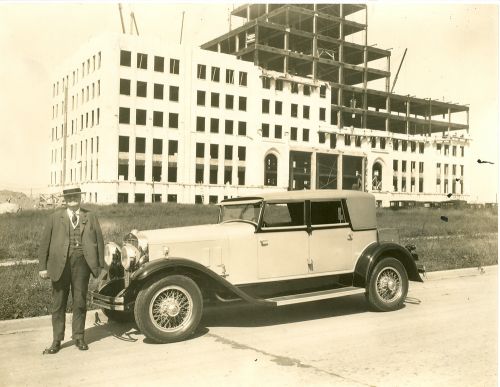
Primient’s journey started 120 years ago when A.E. (Gene) Staley founded the A.E. Staley Manufacturing Company in Decatur, IL.
Over time, this corn wet milling company grew into a leading global producer of food and industrial ingredients, serving customers around the world.
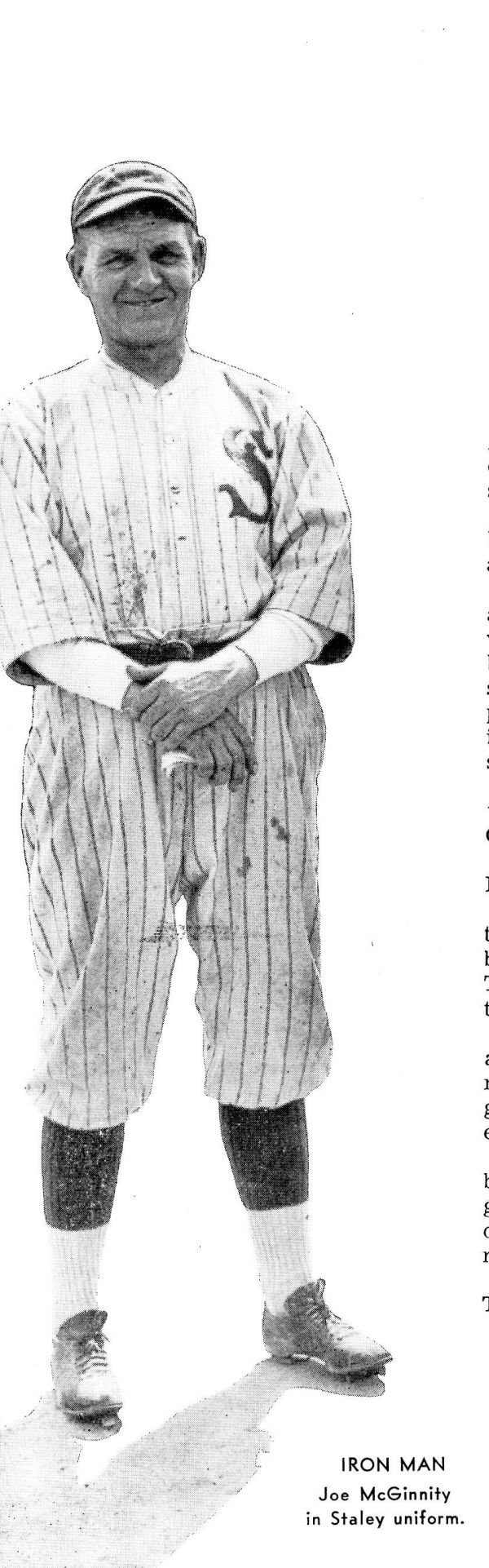
In 1917, A.E. Staley established the Staley athletic program on the factory’s campus in Decatur, IL. The program was designed to encourage teamwork, character development, and sportsmanship among Staley’s growing workforce. The program began with Staley Fellowship Club’s baseball team who hired famous Major League Baseball pitcher Joe “Iron Man” McGinnity as their head coach.
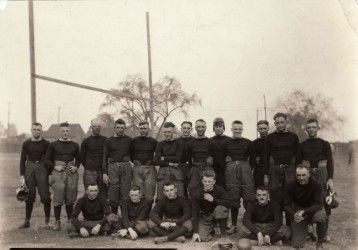
The Decatur Staleys’ first roster included 34 A.E. Staley Manufacturing Company employees who were interested in playing football.
To lead the new team, the Staleys appointed Fritz Wasem, a former Millikin University baseball and football standout, player as their first manager. Former Millikin football coach Robert E. Brannan took over as head coach, while Staley baseball player Charlie “Chuck” Dressen assumed the role of quarterback.
With strong leadership in place, Staley was positioning the Decatur Staleys to be one of the best independent team organizations in the state.
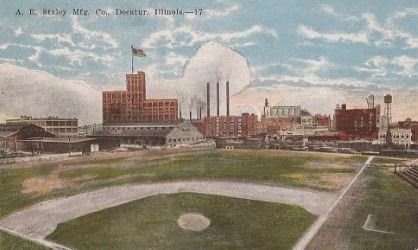
The first Decatur Staleys practice took place on September 24 on the Staley athletic field.
Staley Field could hold 1,500 seated fans, with room for another 1,000 standing spectators. Admission was $1 per game — about $19 today — while Staley Company employees received a 50% discount.
For salaries, the players received shares from gate receipts; although they were estimated to be paid $10–20 per game, the number was lower due to travel expenses and opposing teams also getting their split of the ticket sales.
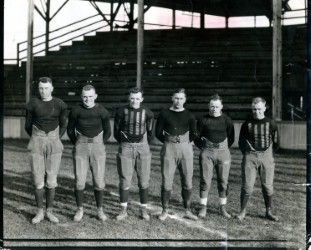
The Decatur Staleys inaugural home opener hosted the Stonington football team on October 12 at Staley Field. According to Decatur’s Herald and Review, the Stonington team had their mind set on “revenge” after their baseball team’s previous loss to the Staley baseball team.
Ultimately, the Staleys secured their first win with a score of 50-3 with approximately 1,000 fans in the stands. The Decatur Herald wrote the crowd "showed [Decatur's] interest in the Staley team and the locals are assured of even greater crowds if they get teams of more equal caliber to meet."
This victory marked the first of many home wins for the Staleys and reflected the team's early progress.
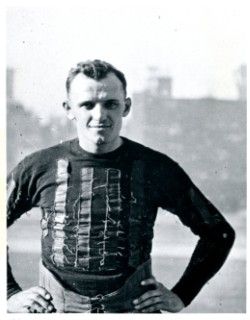
After the Decatur Staleys ended an impressive 8–1 inaugural season in November 1919, A.E. Staley gained interest in growing his football team to professional status
Staley recruited George Halas, a well-known football and baseball player from the University of Illinois to partner with him on this sports venture.
In March 1920, Halas received a call from Staley offering him the opportunity to learn the starch business while playing for the company's baseball team and serving as manager and head coach of the Decatur Staleys.
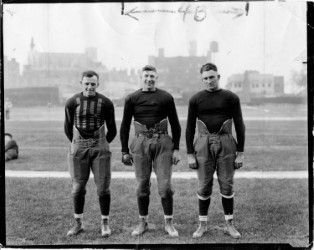
When George Halas officially joined the Decatur Staleys, he quickly turned his attention to building the team's roster for the Fall 1920 season.
Halas went out on what some have called “the first professional football recruiting journey in history.” When Halas returned, he reported to Staley that he now had a team that would draw standing room only crowds.
The agreement with the recruited players provided that they would enjoy the stability of a regular salary based on their work week at the Staley Manufacturing Company.
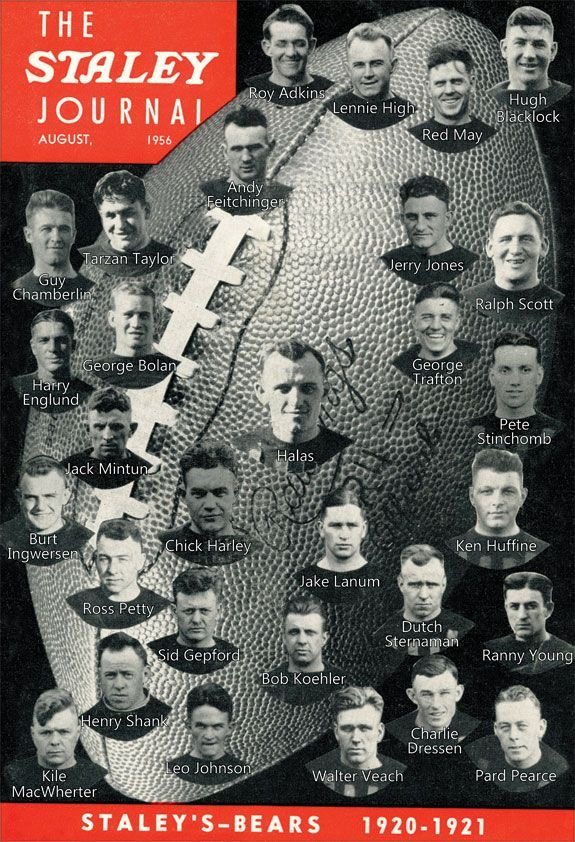
The NFL was originally founded as the American Professional Football Association (APFA) on September 17, 1920, in Canton, OH.
George Halas and Staley engineer Morgan O’Brien represented the Decatur Staleys at this founding meeting. In two hours, the APFA was created. The Decatur Staleys signed on as one of the first 14 teams.
The Racine (Chicago) Cardinals (now Arizona Cardinals) are the only two teams that attended the APFA’s organizational meeting and continue to operate in the NFL today.
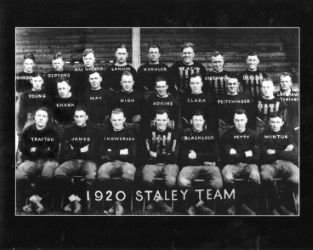
As the American Professional Football Association (APFA) grew, A.E. Staley recognized that the Decatur Staleys would outgrow their hometown market. While the team had found success on the field, Decatur's small population, limited seating capacity, and modest ticket revenue made it difficult to sustain the team’s long-term growth.
Believing professional football required the support of a larger city, Staley proposed that George Halas relocate the team to Chicago's Cubs Park (now Wrigley Field), where larger crowds and greater financial opportunities could help secure the franchise's future.
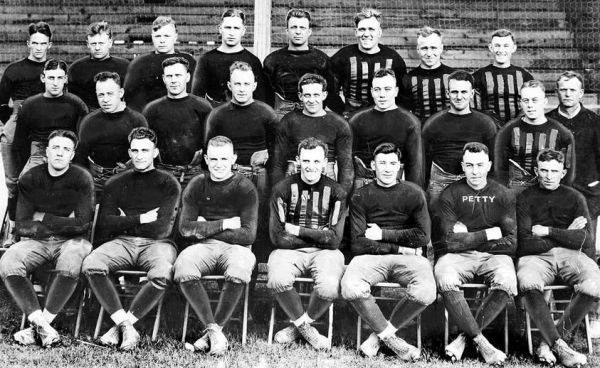
In 1921, A.E. Staley transferred ownership of the Decatur Staleys to George Halas, providing him with $5,000 in financial support and permission to relocate the team to Chicago. In return, Halas agreed to keep the Staleys name for the 1921 season. That same year, the Chicago Staleys won the American Professional Football Association (APFA) championship.
In 1922, after the one-year agreement ended, Halas renamed the team the Chicago Bears, marking the beginning of a new era in football history.